Why should we read the Bible? Because it reveals the truth.
But sometimes truth can be a slippery prey. Take, for instance, the doctrine of justification.
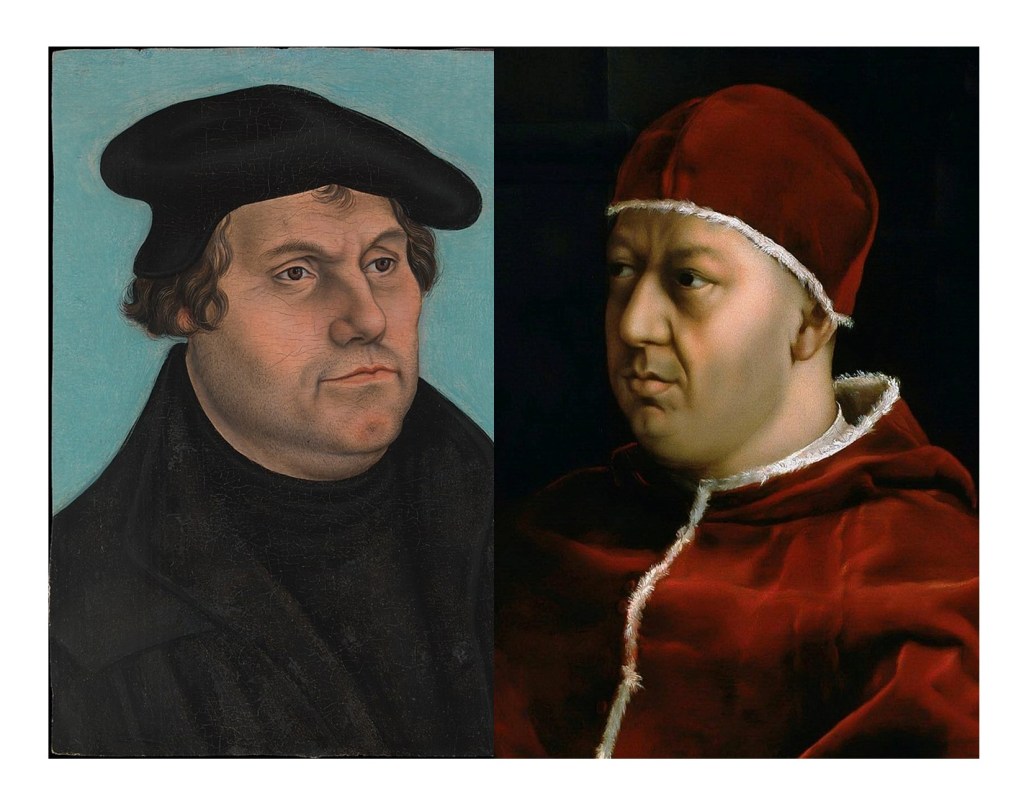
This doctrine was one of the principal issues of contention in the era of the Reformation. It was one of the most important reasons for the schism between Catholics and Protestants.
And then, over the course of 500 years (things move slowly in Christian history), the beliefs of the Catholic Church and some Lutheran churches migrated and the strident anger of the 16th century abated. In 1988, a joint Lutheran-Roman Catholic statement appeared, declaring that, in spite of remaining differences, the two bodies were in agreement on the essential points of the doctrine of justification. What does this episode tell us about truth?
Looking at the creeds of the early churches will prove instructive.
Many readers will know the official version of the creeds: Early church leaders, concerned about the doctrinal error of heretics, met together and, guided by the Holy Spirit, proclaimed the truth in clear, forceful, and unambiguous terms. (Cyril of Alexandria actually says, in his letter to John of Antioch, that at the council of Nicaea, it was not the bishops, but the Holy Spirit, who spoke.)
This is a nice story, but sometimes it’s good to add in some knowledge of history. Careful study reveals that there was a lot of negotiating and compromising in the process the produced the creeds.
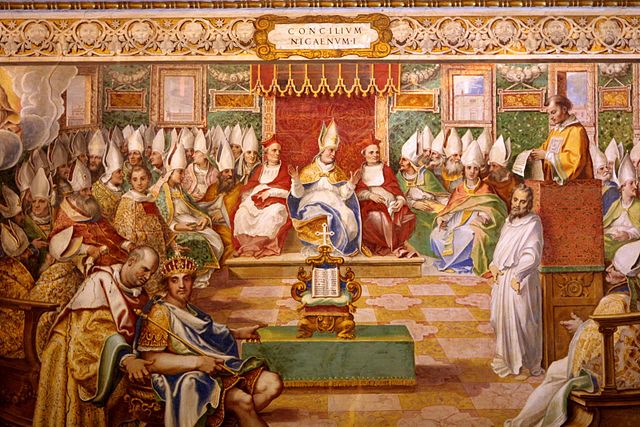
The Nicene creed gives us an example. The council had to find a way to affirm 1) the unity of God and 2) the eternity and full divinity of the Son, 3) ruling out any subordination of the Son to the Father, while 4) allowing for some meaningful priority of the Father.
To achieve these ends, the council employed a term, “homoousion,” a word of uncertain meaning. Although vague, the word was well chosen, for using it allowed a majority of the council to affirm the creed, with different groups interpreting it in their own way. The creed, in other words, was a negotiated compromise between several ways of thinking about the Trinity.
Here, someone may object: It doesn’t really matter how a doctrine comes to be defined. The point is that, once defined, it represents the consensus of the church and cannot be overturned. No church in mainstream Christianity has ever rejected the Nicene creed. Surely, the creeds must be permanent expressions of the truth, right?

Well, here’s where a bit more knowledge of history becomes helpful. Fast-forward to the Reformation. Both Martin Luther and John Calvin affirmed the creed of Chalcedon (that’s the creed that established the orthodox doctrine about Jesus–divine and human). What’s interesting is that their affirmation of the creed did not prevent them from having two very different views of Jesus.
Sorry for the attention to detail if you aren’t into doctrinal history, but: For Luther, the union of Christ’s divine and human natures was so thorough that the flesh of the resurrected Jesus shared in the omnipresence of divinity. The resurrected body of Jesus, in other words, was everywhere in the universe and, most important for Luther, present in the cup and bread of communion. For Calvin, however, it was very important to emphasize that there was no blending of natures in Jesus–the divine and the human natures retained their distinctive features. As a result, the body of the resurrected Jesus remained a human (though glorified) body and was not omnipresent. That’s why, for Calvin, Christ is not physically present in communion. We enjoy spiritual communion with Jesus, but he is not present in the cup and the bread as he is for Luther.
The creed thus contains enough wiggle room to allow very different ways of thinking about Jesus’ body, with important consequences for sacramental theology.
OK, I can hear someone saying, maybe all this is true of creeds and councils, but surely the New Testament is different–here we have God simply and clearly declaring the truth once and for all.
Well, not so fast. In fact, the NT gives us evidence of early Christians doing plenty of negotiating and compromising on important issues.

According to Acts, the early church debated whether to allow Gentiles to join the church without becoming Jews. Things come to a head in Acts 15, when leaders come together to deliberate. As we know, the council decided to allow Gentiles into the church without becoming Jews. What is often ignored is that the council stipulated 4 requirements for Gentiles, including abstaining “from whatever has been strangled and from blood” (Acts 15:20 [NRSV]).
The council’s decision was clearly a compromise (for the sake of argument, I’m assuming the historical reliability of Acts, always a dicey strategy, but that’s a topic for another post). Some OT regulations were enjoined on Gentiles, but not the full Jewish law. At the same time, the rest of the NT shows us that these two requirements played no actual role in the Gentile churches, even though there were promulgated by the apostles. Paul, for example, never mentions them. So, the great decision and consensus of the church actually had a pretty short shelf-life.

Early Christians also did some negotiating with Greco-Roman culture. The ministries of Jesus and Paul contained beliefs and practices that were subversive of ancient assumptions about marriage, family, and the status of women.
Sizable portions of the NT, however, give clear evidence that some Christians were nervous about this subversive message and sought to allay pagan fears about the potential danger of Christianity to the social order. Ephesians and 1 Timothy, for example, endorse the structure of the Greco-Roman household, with its patriarchal nature, subordination of women, and endorsement of slavery. 1 Peter tells its readers to honor the emperor (I think the author of Revelation would take issue with this). These letters, in other words, offer testimony to the process by which Christian disciples tried to figure out how to live as Christians in a hostile environment.
But this means that the NT contains unresolved tensions. Is human government God’s servant (Paul) or a front for Satan (Matthew, Revelation)? Can women be apostles (Paul) or not (Acts, 1 Timothy)? Is celibacy something to be considered (Jesus, Paul) or something to be ignored (Ephesians, 1 Timothy)? Are we to give away all our money (Gospel of Luke) or give to charity (Acts, 1 Timothy)?
My point is that Christian belief is a negotiated process over time. Sometimes a doctrine seems to have reached a static condition, but even then there are still changes occurring behind the scenes. Catholic and Lutheran beliefs about justification did not remain fixed. The creed of Chalcedon can be interpreted in various ways. The apostles’ decree was pretty much ignored.
None of this means that we should cynically give up on the quest for truth. It just reminds us that truth is a journey. Sometimes, on this journey, the landscape changes. Sometimes a detour becomes necessary. Sometimes we spy a vista that we’ve never seen before. Christian faithfulness is a matter of persevering on the journey.
Photo attributions:
- Luther: [[File:Martin Luther (1483–1546) MET DP159769.jpg|Martin_Luther_(1483–1546)_MET_DP159769]]
- Leo X: [[File:Raffael 040 (crop).jpg|Raffael_040_(crop)]]
- Council of Nicaea: [[File:Nicea.jpg|Nicea]]
- Calvin: [[File:John Calvin Museum Catharijneconvent RMCC s84
- Roman senator: Capitoline Museums, Public domain, via Wikimedia Commons


Nice work Sam. I can’t add anything to what you said. All in favor say “Aye!”.
LikeLike